Voyager 1 becomes first spacecraft to reach one light-day from Earth
NASA's Voyager 1, launched in 1977, is now so far away that its signals take a full day to reach Earth.
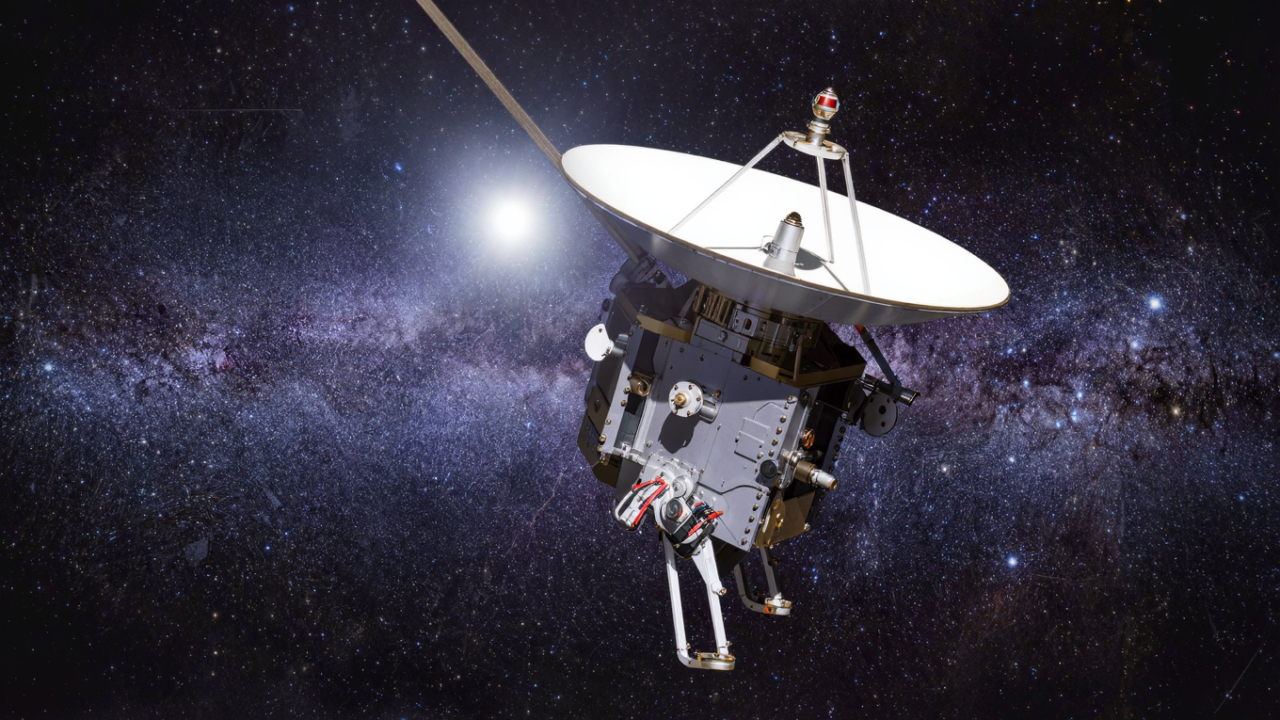
NASA’s Voyager 1 became the first human-made object to sit one light-day from Earth on Wednesday, 18 November. At that distance, a radio signal travelling at the speed of light needs a full 24 hours to reach the spacecraft.
According to NASA’s timing, the moment came at 10:16 UTC, which was 12:16 South African time, EarthSky reported.
How far is one light-day?
One light-day works out to about 25.9 billion kilometres, or roughly 173 times the distance between the Earth and the Sun. Voyager 1 took 49 years, two months and 11 days to get there, moving at about 61,000 km/h, AP reported via ITV News.
The probe launched on 5 September 1977, flew past Jupiter and Saturn, and left the Sun’s zone of influence in 2012. It is still talking to Earth, although most of its instruments have been switched off over the years to save power. NASA turned off one more, a charged-particle sensor, in April this year.
Project manager Suzanne Dodd called the mission “a national treasure”. NASA expects it to take about 18,000 more years for Voyager 1 to reach a full light-year away.
Its twin and the golden record
Voyager 2, which launched a few weeks earlier and toured all four giant planets, is slower and about 3.2 billion km closer. It is only due to hit the one light-day mark in November 2035.
Both craft carry a golden record of sounds and images from Earth, meant as a message for anyone who might find them. Bill Nye of the Planetary Society pointed out that most people alive today were not yet born when the two probes left.
Space fans in South Africa who want to join the celebration can catch the Planetary Society’s free YouTube livestream, which runs from 03:00 to 04:00 SA time early on Thursday morning and features members of the Voyager team.
Source: EarthSky, ITV News (AP)